
New Maruti Suzuki Baleno 2026: Price, Features, Engine & Full Review
Maruti just did something it rarely does: it took the Baleno’s most-loved engine and killed it. In its place: radar-guided cruise control, a segment-first ADAS suite, and a three-cylinder motor that everyone’s arguing about. This is the most interesting update the Baleno has had in years — here’s the full breakdown of what changed, what it costs, and where Maruti quietly cut corners.
Maruti Suzuki Baleno 2026 Price in India
The Baleno 2026 launched on 5 September 2026 at an introductory ₹6.10 lakh. Maruti has since revealed the full variant-wise price list, which quietly lowered the effective starting price to ₹5.99 lakh. Here’s the complete breakdown:
| Variant | Petrol Manual | Petrol AMT | CNG Manual |
|---|---|---|---|
| Sigma | ₹5.99 lakh | — | — |
| Delta | ₹7.00 lakh | ₹7.50 lakh | ₹7.92 lakh |
| Zeta | ₹8.00 lakh | ₹8.50 lakh | ₹8.92 lakh |
| Alpha | ₹9.10 lakh | ₹9.60 lakh | — |
| Alpha (O) | ₹9.50 lakh | ₹9.99 lakh | — |
Prices are ex-showroom and may vary slightly by city. AMT variants cost about ₹50,000 more than their manual equivalents; the CNG kit adds roughly ₹92,500 over the corresponding petrol-manual trim. CNG is currently offered only on Delta and Zeta with a manual gearbox — a CNG-AMT combination has been reported but isn’t confirmed across the range yet.
The Engine Everyone’s Arguing About
Here’s the part that’s split the comment sections wide open. Maruti has dropped the 1.2-litre, 4-cylinder K12N — the engine that made the old Baleno feel noticeably smoother than every rival in its class — and replaced it with the 1.2-litre, 3-cylinder Z12E already doing duty in the Swift and Dzire.
| Powertrain | Power | Torque | Gearbox |
|---|---|---|---|
| Petrol (Z12E) | 83 PS | 112 Nm | 5-speed MT / 5-speed AMT |
| CNG | 70 PS | 102 Nm | 5-speed MT |
That’s 7 PS down on the outgoing engine. On paper, that reads like a downgrade — and for buyers who cared about the Baleno’s famously refined 4-pot, it kind of is. But Maruti’s trade is deliberate: better low-end torque for city driving and a genuine mileage bump (more on that below). Going by how the same engine behaves in the Swift, don’t expect the same hushed cabin at higher revs — three-cylinder engines are inherently a bit more vocal past 3,500 rpm. If refinement was your main reason to buy a Baleno over an i20, that reason just got weaker.
Mileage: The One Place the New Engine Wins Outright
- Petrol MT: 23.80 kmpl (ARAI) — up from 22.35 kmpl
- Petrol AMT: 24.77 kmpl (ARAI) — up from 22.94 kmpl
- CNG: 33.61 km/kg (ARAI) — up roughly 3 km/kg
No arguments here — this is a clean win for anyone doing serious city mileage, which, let’s be honest, is most Baleno buyers.
Design: Bolder Grille, Same Silhouette
Maruti didn’t touch the Baleno’s core shape — smart move, since it was never the problem. What’s new:
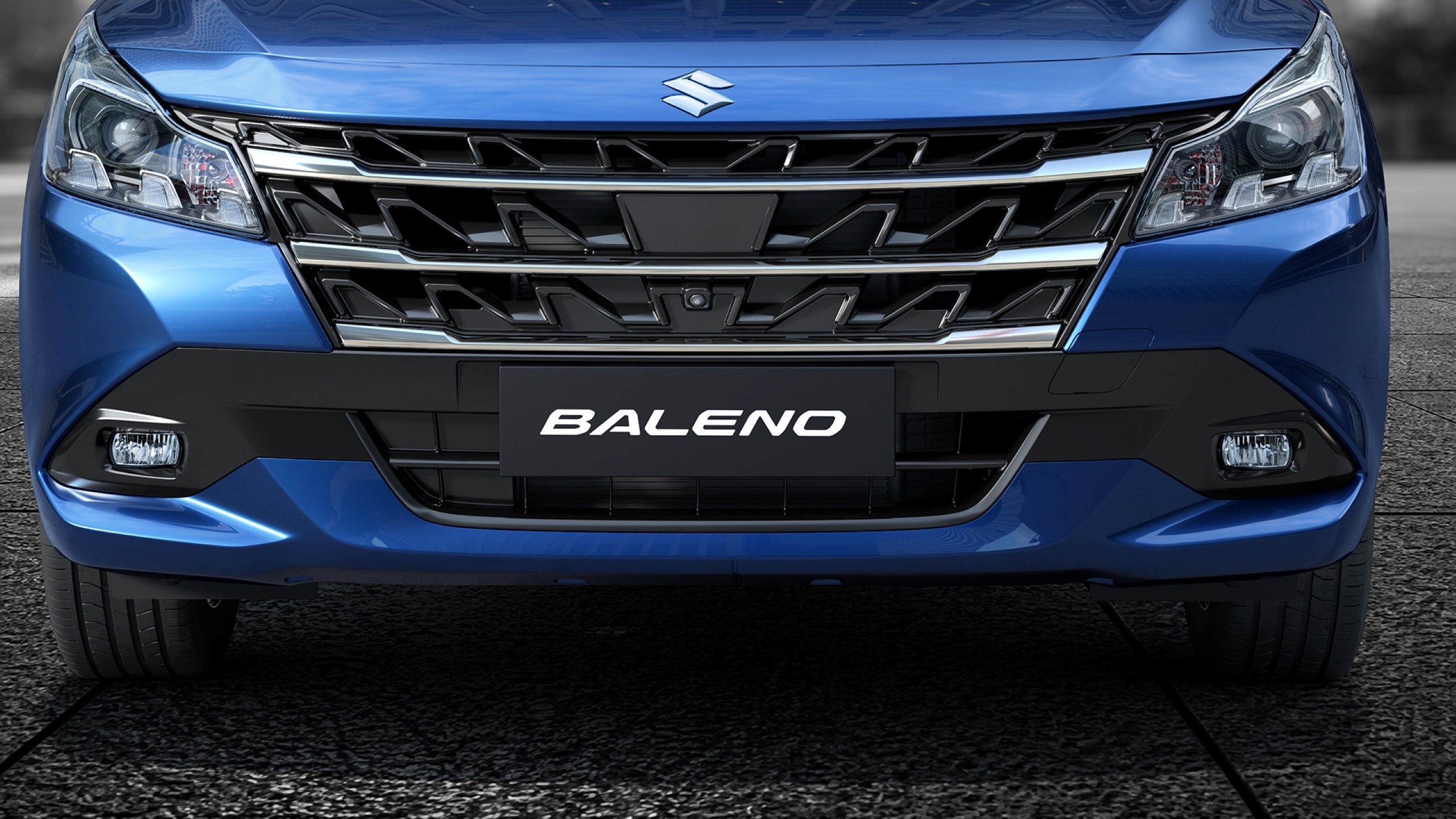
- A redesigned “NEXwave” front grille with a wider, bolder horizontal bar
- A revised front bumper with a fresh air-intake layout
- Suzuki badge now sits on the bonnet
- New alloy wheel design
- A mildly updated rear bumper and shark-fin antenna
Reviewers who’ve seen it in person say the new grille reads as “too bold” for what is otherwise a fairly sober design — it’s a love-it-or-hate-it change, not a universally-liked one. The boomerang-shaped LED DRLs, headlight cluster and roof spoiler all carry over unchanged.
Safety: This Is the Real Story of the 2026 Baleno
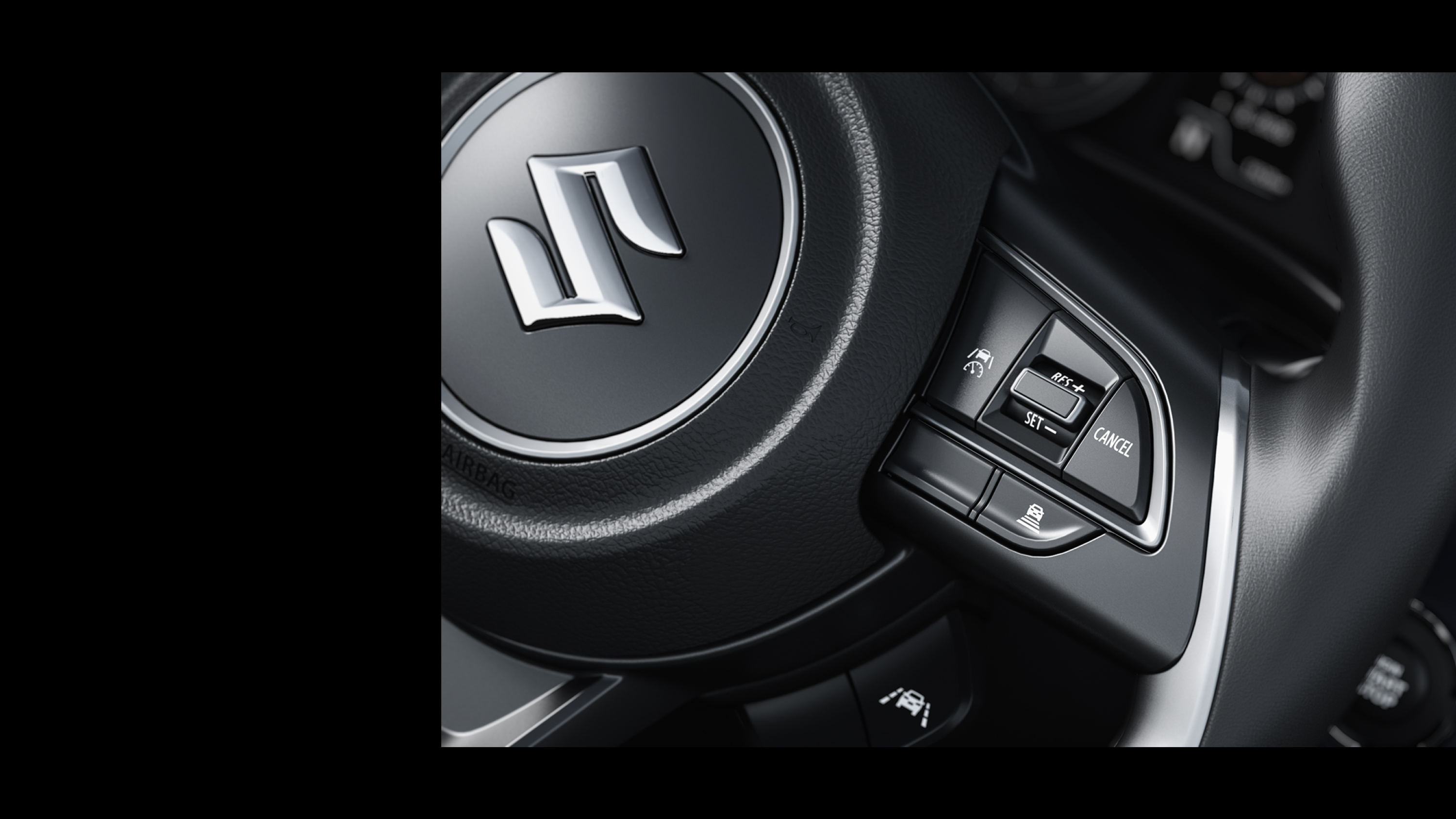
Forget the grille. This is the update that actually matters. The 2026 Baleno is the first hatchback in the B2 segment to get a genuine Level 2 ADAS suite — and it’s not a watered-down “ADAS-lite” badge job. You get:
- Adaptive cruise control
- Lane-keep assist
- Autonomous emergency braking
- Blind-spot warning
- Rear cross-traffic alert
- High-beam assist
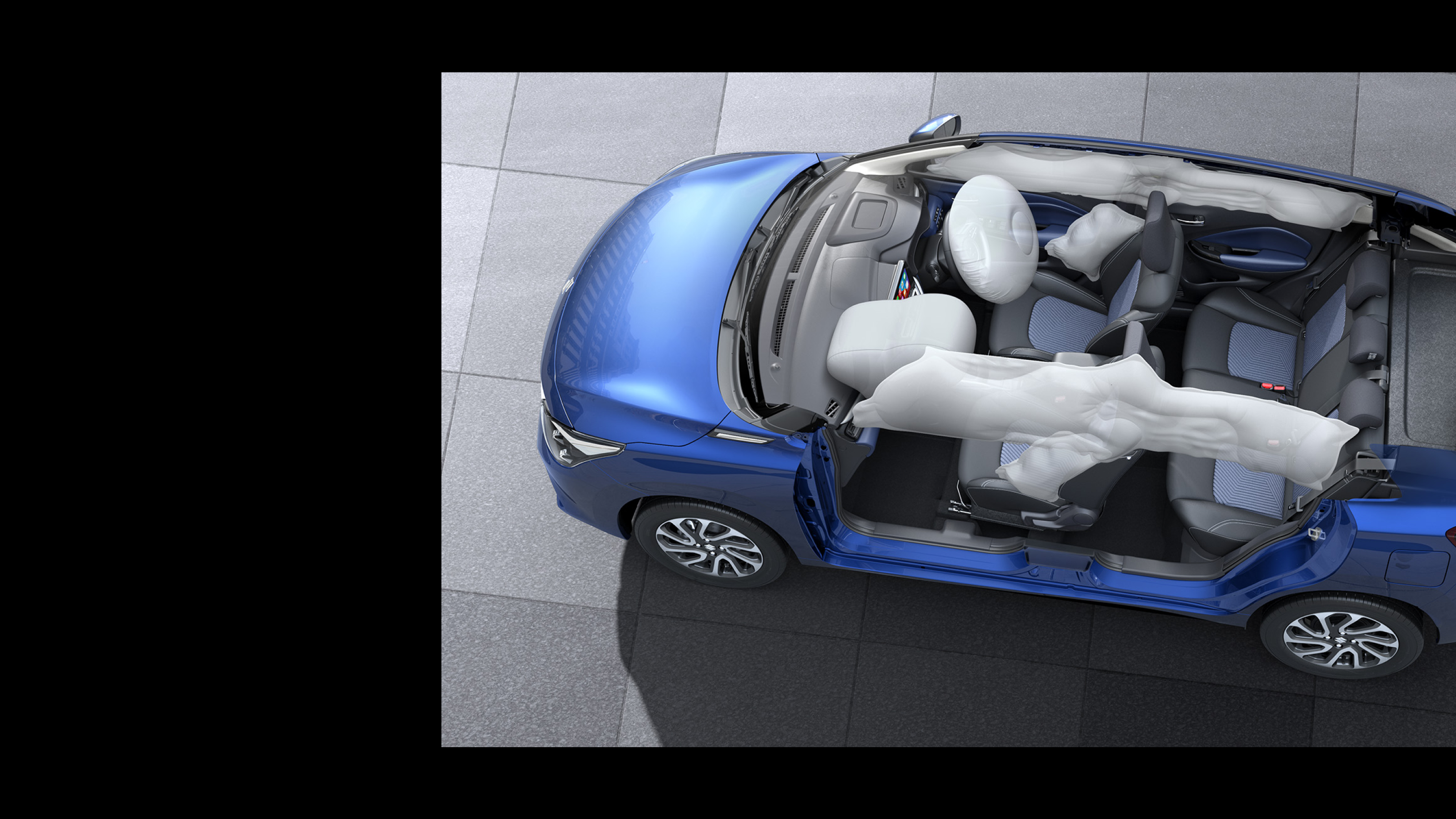
Add to that 6 airbags on higher variants, a tyre pressure monitoring system, a 360-degree camera, ABS with EBD, ESP with hill-hold assist, and ISOFIX anchorages. It carries a 4-star Bharat NCAP rating for both adult and child occupant protection. Rivals in this price bracket simply don’t have an answer to the ADAS suite yet — that’s the single biggest reason to consider this car over an i20 or Altroz right now.
Interior: Genuinely Nicer, With One Baffling Omission
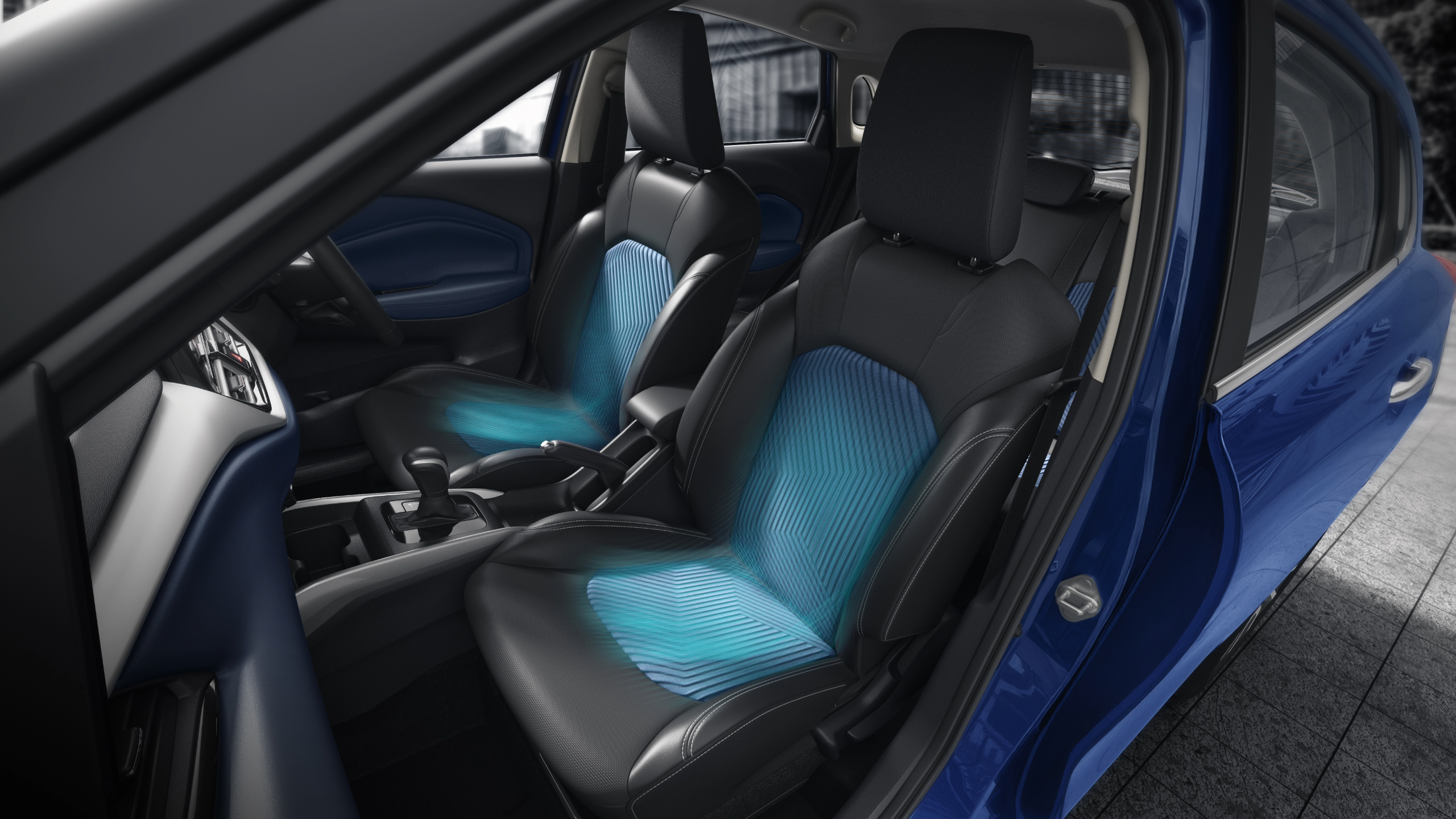
The dashboard layout is largely familiar, but Maruti has bolted on a solid list of comfort upgrades: ventilated front seats, a wireless charger with active cooling, a Clarion sound system, a head-up display, a flat-bottom steering wheel, and — thankfully — physical buttons for climate control instead of a touch panel that fogs your windshield in monsoon traffic while you fumble for the AC toggle.
And yet: still no sunroof, and still no rear centre armrest. In 2026. On a car that now costs up to ₹10 lakh. That’s not a minor miss — it’s the one omission that’ll actively cost Maruti sales to rivals, because a sunroof has become close to a checkbox item for hatchback buyers in this bracket, rational or not.
Baleno 2026 vs Rivals
| Car | Starting Price (ex-showroom) | ADAS | Sunroof |
|---|---|---|---|
| Maruti Baleno 2026 | ₹5.99 lakh | Yes (Level 2) | No |
| Hyundai i20 | ₹7.04 lakh* | No | Yes |
| Tata Altroz | ₹6.60 lakh* | No | Yes |
| Toyota Glanza | ₹6.66 lakh* | No | Yes |
*Approximate ex-showroom prices of the current, pre-update rivals — check live pricing, since some of these are due their own refreshes soon.
Basically: Maruti is betting that “the only car here with ADAS” beats “the only car here without a sunroof.” That’s a genuinely interesting bet, and it won’t be obvious who wins it until sales numbers come in over the next couple of months. Worth flagging too — the Toyota Glanza shares its platform with the Baleno, and its own facelift (expected to move to this same Z-series engine) is due around mid-October 2026, which could reshape this whole comparison within weeks.
Should You Actually Buy It?
Buy it if: you drive mostly in the city, want the most advanced safety kit money can currently buy in this segment, and you’re the kind of buyer who’d rather have adaptive cruise control than a hole in the roof.
Skip it if: a sunroof is non-negotiable for you, or you specifically loved the old Baleno’s 4-cylinder refinement — in which case, test-drive the new 3-cylinder yourself before signing anything. Don’t take anyone’s word for how it feels, including this article’s.
Frequently Asked Questions
What is the price of the new Maruti Baleno 2026?
The 2026 Baleno facelift is priced from ₹5.99 lakh to ₹9.99 lakh, ex-showroom, across the Sigma, Delta, Zeta, Alpha and Alpha (O) variants.
What engine does the 2026 Baleno use?
It uses a new 1.2-litre, 3-cylinder Z12E petrol engine producing 83 PS and 112 Nm, replacing the older 4-cylinder K12N engine. A CNG version with 70 PS is also available.
Does the Baleno 2026 get a sunroof?
No, the 2026 Baleno facelift does not offer a sunroof on any variant.
Does the new Baleno have ADAS?
Yes. The Baleno 2026 is the first car in the B2 hatchback segment to offer a Level 2 ADAS suite, including adaptive cruise control, lane-keep assist and autonomous emergency braking.
What is the mileage of the Baleno 2026?
The ARAI-certified mileage is 23.80 kmpl for the manual, 24.77 kmpl for the AMT, and 33.61 km/kg for the CNG variant.